
Judah’s Fatal Decision Jeremiah 40—43
In 586 B.C. the Babylonians captured Judah, destroyed Jerusalem, and deported the Jewish people to Babylon. Only a remnant of poor Judeans were left in the land to…
In 586 B.C. the Babylonians captured Judah, destroyed Jerusalem, and deported the Jewish people to Babylon. Only a remnant of poor Judeans were left in the land to…
1 John 1:5–10: Fellowship with God the Father and His Son Jesus Christ is the message the apostle John proclaims throughout this epistle. For believers to have fellowship with God, they…
1 John 1:1–4: Before the apostle John wrote 1 John, he had already lived through the inception, expansion, and persecution of the first-century church…
In most Bible-believing churches, a Sunday morning service seems filled with a spirit of joy and harmony. Visitors are welcomed warmly and invited to please come back…
Hebrews 13:18–25: The final eight verses of Hebrews 13 conclude the Epistle to the Hebrews. In them, the author exhorted Jewish believers one last time through a…
To understand the Intertestamental Period, it’s important to look at Israel’s postexilic history and see what happened to God’s Chosen People before the silence fell.
Chapter 13 of Hebrews contains the book’s final admonishment. Whereas verses 1–6 provide practical and personal exhortation on how believers should live in Christ, verses 7–17 focus more on theological…
To this point, the book of Hebrews has stressed the superiority of Christ, while exhorting believers not to leave the church because of persecution but to go on to Christian…
In a fifth and final warning to Jewish believers in Christ, the book of Hebrews contrasts the experience of God’s people at Mount Sinai as they received the Mosaic Covenant…
Tribulation and suffering befall all true Christians sometime in their lives. The believers addressed in the book of Hebrews were no exception. Persecution had…
Is God finished with Israel? By no means. Israel’s return, redemption, and restora- tion to its land are key themes through- out the book of Isaiah. See for yourself!
The book of Hebrews was written to provide evidence of Jesus Christ’s divinity, confirm that the Mosaic Law had been both fulfilled and abrogated in Christ, and exhort Jewish believers…
Hebrews 11:32–40: The beginning of Hebrews 11 describes faith. Then it systematically illustrates it in the lives of those who lived before the patriarchal period until Israel crossed the Jordan River…
After 400 years in Egyptian captivity, the Israelites prepared to enter the Promised Land. The Lord commanded Moses to send one representative from each of the 12 tribes to search…
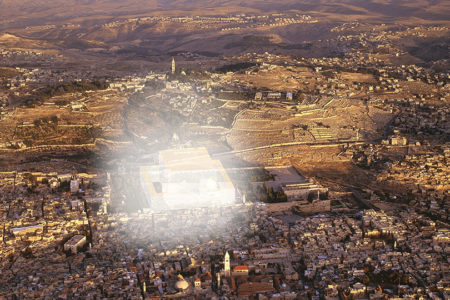
For centuries Bible students have been fascinated by the details surrounding the Temple revealed in Ezekiel 40—46. In fact, a major section of the book of Ezekiel is given over…
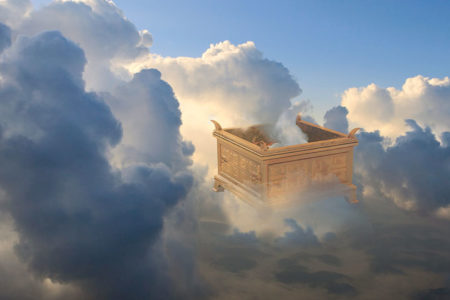
The Millennial Temple’s main objective will be to provide a place of worship for Israel and the Gentile nations that will be similar to, yet distinct from, that under the old Levitical system.
Moses was a gifted leader whom God used to bring about His plan for Israel and the world. He was blessed with good looks, intelligence, opportunities, eloquence, and leadership ability (Ex. 2:2; Acts 7:20, 22).
The Bible was written by 40 different men over 1,600 years. How do we know it’s God’s Word? Read this article and find out!
Now the book of Hebrews moves from the faith of men before the flood to the faith of men in the patriarchal period. The author uses Abraham’s faith to illustrate…
n Hebrews 11 a gallery of portraits is paraded before us, painted by the hand of God. Each portrait presents the unique faith of individuals who performed great exploits. These men and women…
The author of Hebrews revealed in chapter 10 that salvation is established on the bedrock of Christ’s sacrifice and not through the Levitical system. Christ’s death for sin and His abiding priesthood…
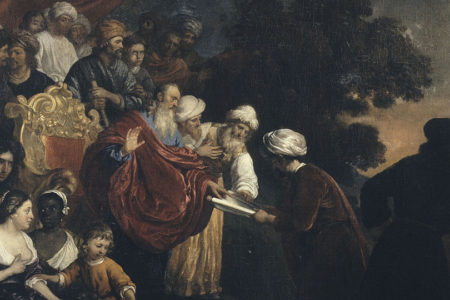
Today’s Muslims claim the Jewish Temple of Jehovah never existed in Jerusalem. The Bible says differently, as you’ll soon see.
This section of the book of Hebrews comes on the heels of a strong warning in 10:25 that believers not abandon assembling together, as some were doing. In fact, Christians in every generation…
To this point, the book of Hebrews has been doctrinal in nature. Using comparison, the author has shown Christ’s superiority over angels, Moses, and the Levitical priesthood. He has also shown…
Hebrews 10 culminates the central exposition on Christ’s eternal priesthood. In his closing argument, the author contrasted the imperfect, insufficient, and ineffective Levitical sacrificial system with Christ’s once-for-all, perfect, and sufficient…
Under the Levitical system, animal blood could only cover sin, never remove it. However, Christ’s blood was sufficient and efficacious to redeem mankind and remove sin. The remaining verses of Hebrews 9…

If living in this sin-cursed world gets you down, there’s good news. Satan—the father of lies, deceiver of nations, and despiser of men’s souls—will one day be judged. Although many people…
Hebrews 9 begins with a description of the earthly Tabernacle and its ministry through the Levitical priesthood under the first (Mosaic) covenant. Both the Tabernacle and its services were temporary…
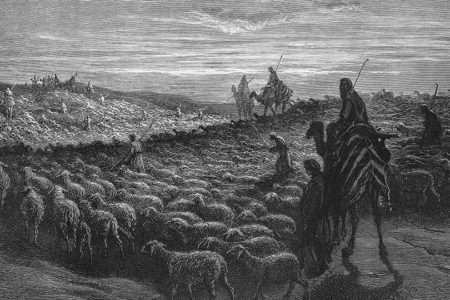
For the past 4,000 years, Satan has incited hatred and persecution of the Jewish people with the objective of annihilating them. This article explains why.
Christ’s high priesthood is superior to the Levitical priesthood because it is based on a New Covenant and operates in a heavenly sanctuary. When referring to the heavenly sanctuary, the author…
Hebrews 8 begins with the author summing up the first seven chapters about Christ’s priesthood: “Now this is the main point of the things we are saying: We have such a High…
Many first-century Hebrew Christians struggled to understand the priesthood of Jesus Christ. Growing up under the Levitical system of animal sacrifices, they had centered their faith in the Aaronic priesthood…
First-century Jewish believers faced some perplexing questions concerning Christ’s high priestly ministry. Why wasn’t He called a priest while here on Earth? How could He be a legitimate high priest and how…
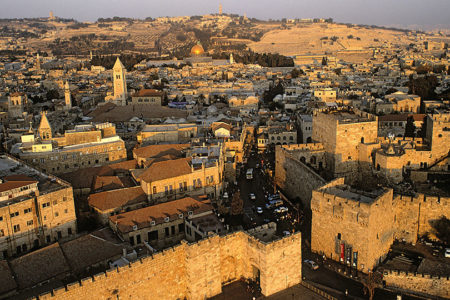
Darius the Mede was appointed king over Babylon in 539 B.C.(Dan. 9:1). In the first year of his reign, the prophet Daniel, by now an old man who had spent…

King Nebuchadnezzar of Babylon had a dream of an image made of various metals, representing different periods of Gentile world rule (Dan. 2:34–35, 44–45). In the dream, a stone cut without…
In the previous eight verses of this chapter, the author encouraged new believers to leave Judaism and press on toward maturity in Christ. Failure to do so, he warned, would disastrously…
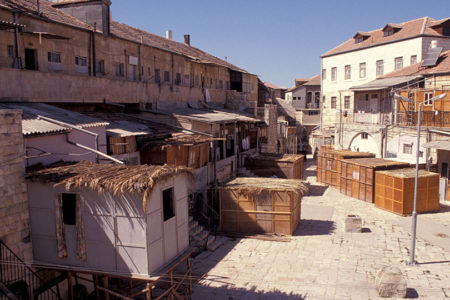
Although some scholars question the reality of a literal, future Temple, the prophet Ezekiel described it in great detail. He provided its dimensions (Ezek. 40—43) and spoke of a future…
Hebrews 6:1-8: Maturing in Christ is a process; it doesn’t happen overnight. Unfortunately, some people never get there. They regress rather than progress. Hebrews 6 warns believers in Jesus to forsake practices…
Hebrews 5:1–14: The tribes of Israel revered the Aaronic high priest. With the exception of Moses, he enjoyed greater access to and fellowship with God than any other Israelite. Although God bestowed…
Hebrews 4:4–16: The importance of what you are about to study on the high priesthood of Jesus Christ cannot be overstated. Christ’s high priesthood is mentioned briefly in Hebrews 2:17 and 3:1; but the subject…
Hebrews 4:1–13: Chapter 3 of Hebrews presents two types of rest: that of entering Canaan (the rest offered to Israel) and that which comes from a life of faith in Christ. All the Israelites 20 and older…
Hebrews 3:1–19: Moses is a dominant figure in Israel’s history. Of all the Old Testament leaders, there is none greater. He is described as “the man of God” and “the servant of the Lᴏʀᴅ” (Dt. 33:1; 34:5).
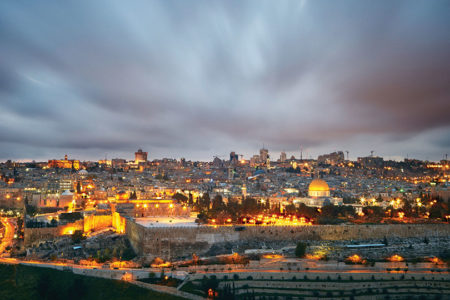
Although many people, including some Christians, deny that Israel’s return to the land is biblical, they are wrong. It is extremely biblical. And here’s why.
Hebrews 2:1–18: In the midst of showing Christ’s superiority to angels, the author of Hebrews paused to apply what he had presented previously. He then warned and exhorted Jewish believers in Jesus—the recipients of this letter…
Hebrews 1:4–14: No chapter in the Bible presents such a full picture of the deity of Jesus Christ as Hebrews 1. After completing His earthly ministry, Christ was restored to the dignity and glory He possessed in eternity past…

Christ did for us at Calvary. The blessings that accrue to us are manifold, and so are the responsibilities.

Just as you must have a plan to achieve your goals in life, so also God has a plan. From the world’s foundation, God’s goal to glorify Himself included a plan to redeem lost humanity.
Hebrews 1:1–3: Hebrews is without question one of the greatest and most important books in the New Testament. In it the writer presented an in-depth study of both the deity and humanity of Jesus the Messiah…
Jonah 4:1–11: If we were writing the book of Jonah, how would we end the story? We’d probably have Jonah rejoicing over being restored from disobedience, rescued from the belly of a fish…
Jonah 3:1–10: The Bible abounds with accounts of God’s judgment. In His righteousness and holiness, He destroys both individuals and nations that are saturated with sin. But He also tells us plainly, “I have no pleasure…
Jonah 1:7—2:10: In February 1891, the crew of the whaling ship Star of the East harpooned a sperm whale. In its death throes, the whale swallowed a man by the name of James Bartley. A day…
Jonah 1:4–17: God chose Jonah the prophet to deliver a divine message of impending judgment to the city of Nineveh. Upon receiving this call, however…
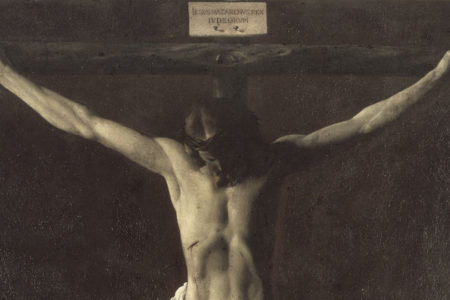
God’s grace comes to us in many forms. Each has a special purpose, and each provides a particular blessing.
Jonah 1:1–3: The book of Jonah is probably the best known of all the Minor Prophets. What child has not heard the story of Jonah who was swallowed by a huge fish? The prophet’s…
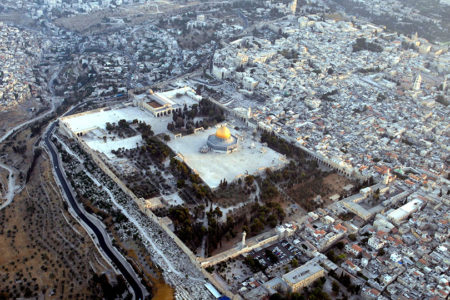
Ezekiel, whose name means “God strengthens,” was born in 627 B.C. to a priestly family in Judah. His father’s name was Buzi (Ezek. 1:3). Ezekiel was married (24:18), owned a house…
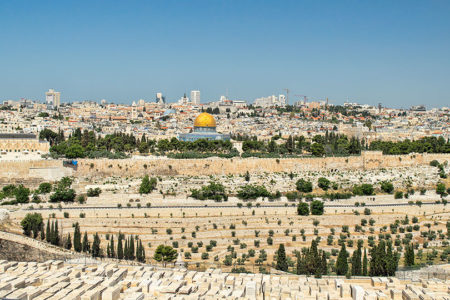
In Ezekiel 37, God asked, “Son of man, can these bones live?” The answer so far is the story of a nation’s resurrection to physical life. But even more lies ahead.
Zechariah 14:16–21: The Messiah’s Second Coming is the dominant theme of chapter 14. His return will be sudden, unexpected, visible, personal, powerful, glorious, and triumphant. When He steps on the Mount…
Zechariah 14:8–15: As Zechariah’s prophecy neared its conclusion, the prophet described a number of physical changes that will take place in Israel immediately prior to the establishment of the Millennial Kingdom. Israel’s topography…
Zechariah 14:1–7: Zechariah closed his prophetic predictions with a sweeping consummation of Israel’s future. The prophet described three major events that will take place: (1) a future invasion of Jerusalem during the Great…
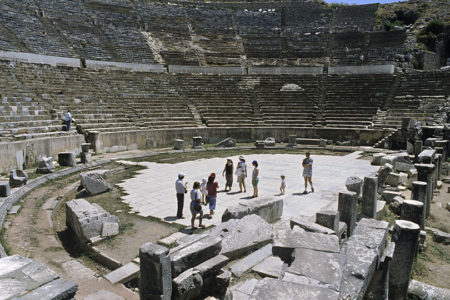
The church in Ephesus had much going for it. Yet it was deficient in an area that many of us are deficient in today. And God was not pleased.
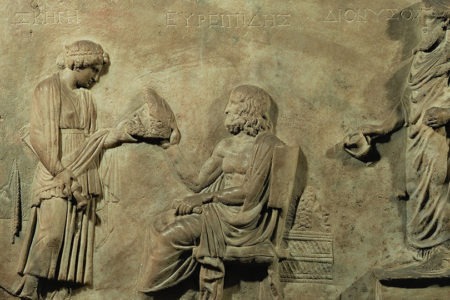
Smyrna was named for the word myrrh, an aromatic gum resin that is bitter to the taste but sweet to the smell. It was used to embalm the dead in the first century…

The language of this verse makes it clear that the church will not go into the Tribulation. This hour of trial will be a time when God’s wrath will be poured out upon…
Zechariah 13:1–9: In the previous chapter, we saw God pour out His grace on Israel, resulting in the nation’s redemption, its reconciliation to God, and its renewed covenant relationship with Him. In chapter 13, Zechariah…
Zechariah 12:1–14: Will Israel survive the hatred and unceasing persecution that has plagued it for centuries? Although it faces a cauldron of unrelenting conflict, Israel will survive the world’s attempts to annihilate it. The last…
Zechariah 11:1–17: In Zechariah 9 and 10, the Messiah is revealed as a compassionate Shepherd who will someday reunite and restore Israel. The revelation greatly encouraged Israel, but the good news was quickly dispelled…
Zechariah 10:1–12: In the previous chapter, the Lord is pictured as a shepherd who saves Israel, and Israel becomes “the flock of His people” (9:16). Israel’s redemption will take place when the nation…
Zechariah 9:9–17: When Alexander the Great conquered the Middle East, he did not lay siege to Jerusalem. The Jewish people survived his conquest because God kept His promise to protect the city (9:8).
Zechariah 9:1–8: The six remaining chapters of Zechariah’s prophecy consist of events pertaining to God’s eschatological program for Israel. They cover a vast period that extends from the Grecian era under Alexander the Great…
Zechariah 8:1–23: In the previous chapter, a delegation from Bethel questioned the necessity of continuing to fast over the destruction of Solomon’s Temple. Zechariah did not address the issue directly; instead, he used the question to reflect…
Zechariah 7:1–14: A delegation from Bethel arrived in Jerusalem seeking counsel from priests and prophets concerning fasting. They asked whether the annual fast commemorating the destruction of Solomon’s Temple should be continued since a rebuilt…
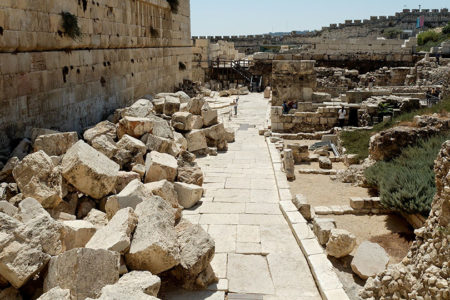
Lamentations 2 reveals three areas of Judah’s destruction and paints vivid word-pictures of the torment the Jewish nation endured as it went into captivity.
Zechariah 6:1-15: What a long night Zechariah must have experienced. He had already received seven apocalyptic visions unveiling Israel’s future, and the eighth was soon to come. This final vision would reveal God’s judgment of the nations…
Zechariah 5:1–11: Zechariah’s first five visions greatly encouraged and comforted the Jewish remnant returning from Babylon. They revealed that the lord would return to Jerusalem with mercy, give Israel victory over its enemies, reestablish and enlarge Jerusalem…
Zechariah 4:1–14: The official seal for the State of Israel was unveiled on February 10, 1949. It consists of a seven-branched menorah (lampstand/ candelabra) with…
God specifically chose Israel to be a holy nation in which He could manifest His grace and truth to mankind (Ex. 19:5–8). Failing to live up to her elective calling, Israel committed gross immorality…
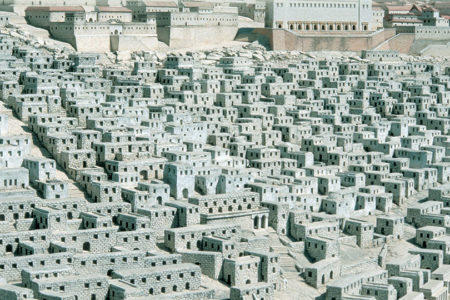
David was a man after God’s own heart. And the covenant God made with him is everlasting, as this outstanding article explains.

A millennialists interpret the Davidic Covenant differently than do premillennialists. Amillennialists believe the promises God made to David in the Davidic Covenant should not be taken literally, but spiritually. They believe that Christ…
No other city is more treasured by the Lord than Jerusalem. The prophet Ezekiel said that Jerusalem is set in the middle of the nations (Ezek. 5:5); and the prophet Ahijah called Jerusalem the city…
Upon the four and twentieth day of the eleventh month, which is the month Shebat, in the second year of Darius [January/February 519 B.C.], came the word of the LORD unto Zechariah, the son of…
The book of Zechariah is among the most profound in the Old Testament and of great importance in view of the times and circumstances in which it was written. Zechariah summed up and condensed most…
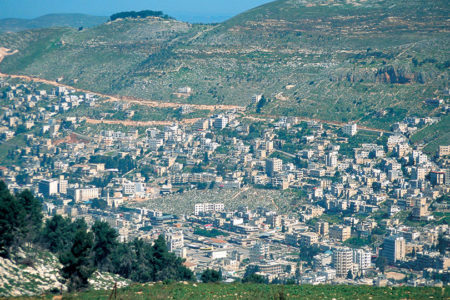
Caleb and Joshua were kindred spirits when it came to faith. Of the twelve men Moses sent to spy out the land, only these two had faith that God would deliver Canaan into Israel’s hands…
Nahum 3:1-19: Assyria’s unrelenting violence, extortion, and brutality are well documented in the records of its history. More important, however, God kept track of such savagery; and He judged it. In chapter 3 Nahum continued his vivid description…
Nahum 2:1-13: On March 19, 2003, a coalition of the United States and more than thirty-five countries implemented a preemptive strike against Iraq to disarm it of weapons of mass destruction. Twenty-six hundred years ago…
Nahum 1:1-15: In the days of the prophet Nahum, Nineveh was at the height of its glory. Its influence through trade, culture, and political conquest extended from Egypt to the Persian Gulf. The city was built by Nimrod…
Micah 7:1-20: Micah’s grief over the deterioration of Judean society is poignantly expressed in this final chapter. The prophet lamented Judah’s sinful condition, knowing that the nation could not go unpunished. In the midst of sorrow…
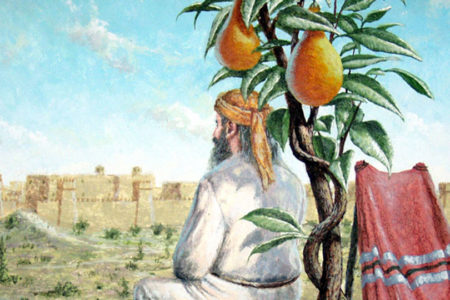
Jonah was bitter, selfish, angry, and a poor excuse for a man of God. Unfortunately, he was not much different than many of us.
Micah 6:1-16: In chapter six of Micah, God brings litigation against the people of Judah, charging them with gross immorality and idolatry. Judah is the defendant, and the Lord is both the prosecuting attorney and judge. Prosecution Revealed…
Micah 5:1–15: For centuries, Jewish people have looked for the Messiah to deliver them from Gentile oppression, secure for them the land of Israel…
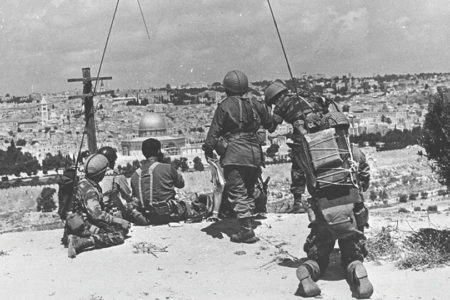
Surrounded by 250,000 enemy soldiers, 2,000 tanks, and 700 jetfighters, Israel again defended herself. The outcome? Another miracle.

Learn the differences between the Levitical sacrifices and Jesus’ sacrifice of Himself while examining the covenants God made with Israel.
Micah 4:1-13: Many questions must have troubled King Hezekiah and the leaders of Judah when they heard Micah preach of the nation’s impending demise. After all, if Judah were destroyed, how would God fulfill the irrevocable promises
Micah 3:1-12: In the book of Micah, God holds Judah’s leaders responsible and accountable for their abuse of the underprivileged. Earlier, Micah condemned those who used the nation’s legal system to defraud people of their property…
Micah 2:1-13: God gave the Jewish people the land of Canaan as an everlasting inheritance. However, their uninterrupted possession of it was conditioned on the nation walking in God’s ways and keeping His commandments. Failure…
Micah 1:1-16: One of the brightest and yet darkest periods of Judah’s history came in the eighth century B.C. Although the prosperity of Uzziah’s kingdom (790–740 B.C.) was still being felt in the days of his son…
Hosea 14:1-9: It is never easy for people to confess their mistakes. Whether it is a spouse seeking to rebuild a marriage or an individual seeking redemption from God, admitting blame usually is difficult. And it was difficult…
Hosea 13:1-16: Although nations do not intentionally commit suicide, Israel was headed that way. Gross idolatry insulted the covenant relationship God had established with the Israelites, and their ingratitude toward Him for His grace and goodness had…
Hosea 12:1-14: Two young boys were fighting in the park. A man took one of the boys aside and began to spank him for his inappropriate behavior. An observant bystander indignantly asked the man…
Hosea 11:1-12: Richard Halverson, former chaplain of the United States Senate, once wrote, “There is nothing you can do to make God love you more, nor is there anything you can do to make God love you…
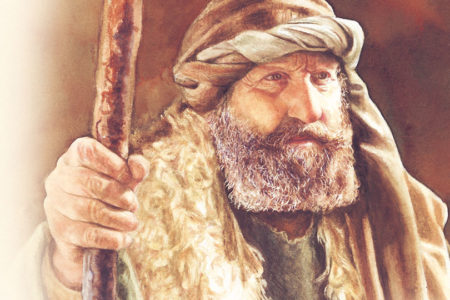
Were the Israelites wrong to demand a king? This insightful article examines the events leading to the creation of the monarchy in ancient Israel.
Sin is like a moral cancer, infecting everything it touches. If you do not deal with it, it will corrupt you totally. What is true of moral corruption in man is also true in nations.