‘Turkey Is the New Iran’
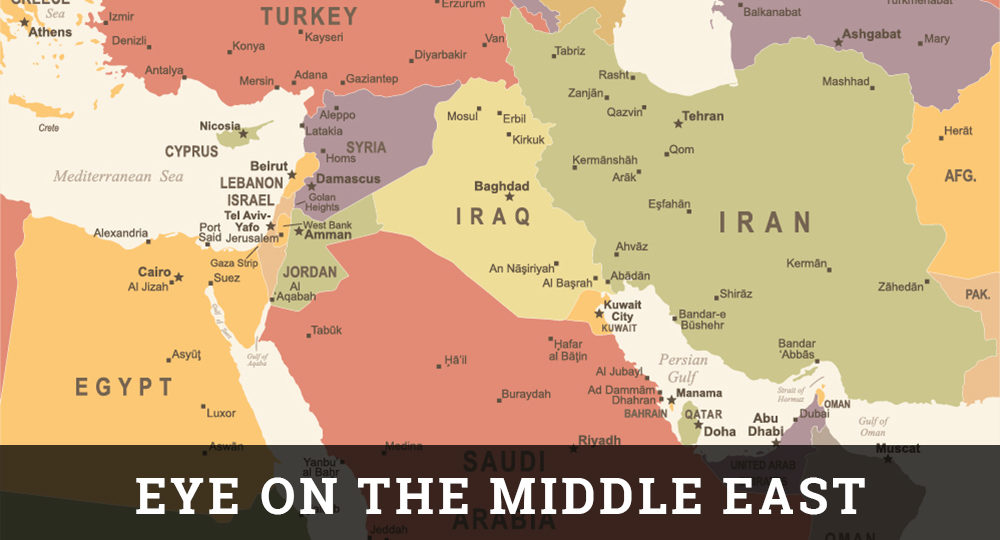
Turkish Foreign Minister Hakan Fidan recently said that Turkey “may be forced” to acquire nuclear weapons to counterbalance Israel and Iran to prevent them from dominating the Middle East. In an interview with CNN Türk, he described having a nuclear weapons capability as a “high-level strategic issue” that must be considered “within the broader, bigger picture” of regional geopolitics.
Fidan’s comments echo those by Turkish President Recep Tayyip Erdoğan, who has said it is unfair for nuclear-armed states “like the United States, Russia, China, France, and the United Kingdom”—the five permanent members of the UN Security Council—to prevent Turkey from obtaining nuclear weapons. “Some countries have missiles with nuclear warheads, not [only] one or two,” he said. “But they tell us we cannot have them. This, I cannot accept.”
Although Turkey currently relies on nuclear deterrence provided by the United States through NATO, the statements have raised concerns that Ankara may be considering an active nuclear weapons program.
A July 2025 poll by Research Istanbul found that more than 70% of Turks support a Turkish nuclear weapons capability because they do not believe that NATO would defend their country if it were attacked. This suggests that the Turkish debate about nuclear weapons is not just about Israel or Iran, but also about domestic politics and grievances about “nuclear injustice.”
The United States has approximately 50 nuclear warheads stored at Incirlik Air Base in southern Turkey. The presence of those weapons is a concrete American security guarantee and consequently the cornerstone of the U.S.-Turkey defense relationship. Any potential loss of the American nuclear umbrella—the protection Turkey gains from its alliance with the United States—could prompt Turkey to develop its own nuclear capabilities.
Turkey is a signatory to the Nuclear Non-Proliferation Treaty, an international agreement aimed at preventing the spread of nuclear weapons by promoting the peaceful use of nuclear energy. This means that Turkey’s civilian nuclear program, which is at an early stage of development, is subject to constant monitoring by the UN’s nuclear watchdog, the International Atomic Energy Agency. Still, the nuclear infrastructure that Turkey is building could be used for military purposes.
In an analysis of Turkey’s nuclear program, Middle East analysts Sinan Ciddi and Andrea Stricker warned that if misused, Turkey’s civilian nuclear energy program “could assist” an effort to acquire nuclear weapons. “Nuclear-electrical power production provides a means for Ankara to acquire basic nuclear infrastructure, know-how, and training,” they wrote. “Nuclear energy programs have helpfully served as covers for states like Iran to import needed equipment for nuclear weapons.”
Ciddi and Stricker added, “Erdoğan aspires to elevate Turkey as a great power. Given his emphasis on strengthening conventional military capabilities, he may also seek to expand the country’s unconventional weapons arsenal to reinforce this ambition.”
Lebanese writer Mohamad Kawas agreed: “The Turkish nuclear debate reflects more than security anxieties; it signals a broader strategic repositioning by a state that perceives itself as a major regional power seeking to safeguard its role within an evolving international and regional order.”
Israeli scholar Noa Lazimi warned that nuclear ambitions are “closely tied to Turkey’s self-perception as a regional power with aspirations to revive an Ottoman-style sphere of influence.” She believes Turkey is pouring “enormous resources into its defense industries, and it is difficult to imagine it voluntarily giving up on the development of nuclear weapons, which could one day add a significant layer to its power projection and deterrence.”
Middle East expert Yoni Ben Menachem posited that Erdoğan is “moving rapidly to encircle Israel” by “working to consolidate the Sunni world, transforming former Arab rivals, including Egypt, into partners in a broader alignment that could redirect regional momentum against Israel.” He concluded, “Turkey is the new Iran.”