The Fourth and Final Temple
God gave precise details concerning construction of the Millennial Temple—including details about sacrifices.
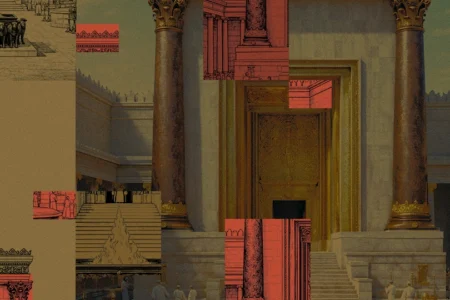
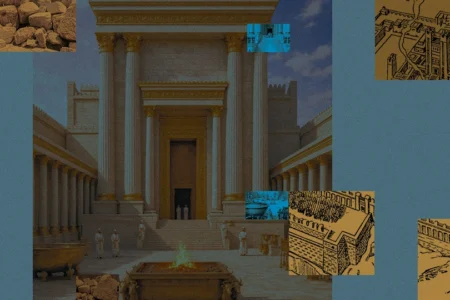
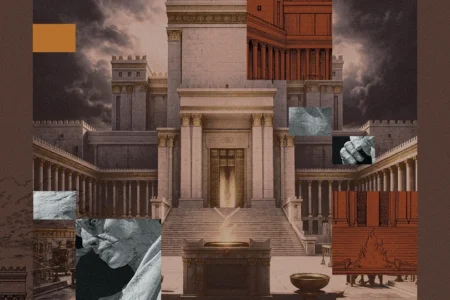
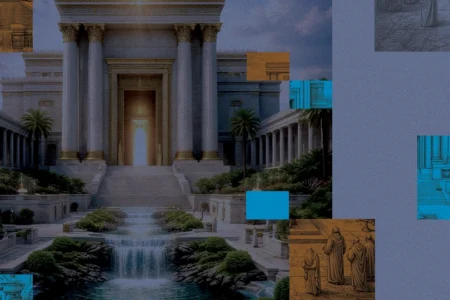
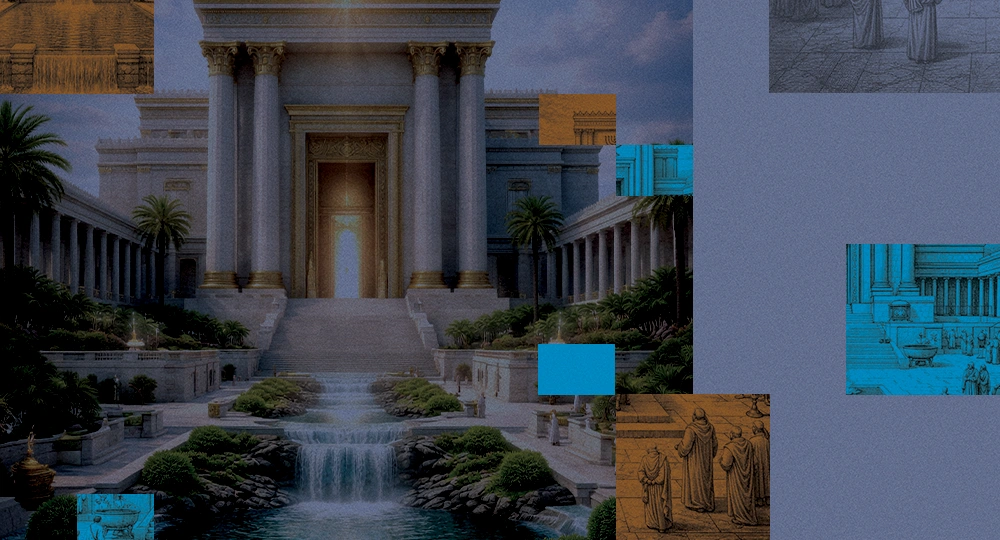
Although our great God and Creator is everywhere all the time, He has chosen throughout history to localize Himself in special ways, demonstrating His nearness via such things as a burning bush; a pillar of fire; the Tabernacle; the Temple; the person of Jesus Christ; and His Holy Spirit, who indwells church saints. All these localizations highlight God’s presence for His people. A future example of God demonstrating His nearness will be via the Fourth (and final) Temple: the Millennial Temple described in Ezekiel 40—48.
Various Jewish traditions consider the Ezekiel Temple the Third Temple, to be built immediately before or coinciding with the Messianic Kingdom and the coming of the Jewish Messiah. It is best, however, to distinguish between the Third Temple, which will exist during the future seven-year Tribulation, and the Temple that will be built to the dimensions provided in Ezekiel’s vision.
This Fourth Temple will stand during the future Millennium (Messiah’s 1,000-year-reign on Earth), not in the eternal state of the new heavens and new earth. During the Millennium, based on Ezekiel 40—48, animals will be killed for sacrifices. However, in the new heavens and new earth, death is abolished (Rev. 21:4). In addition, the presence of God and the Lamb (Jesus) is so powerfully pervasive in the eternal state that there is no need for a Temple structure. No localization of God’s presence will be necessary (vv. 22–23).
God’s Precision
A serious study of Ezekiel 40—48 raises several questions:
(1) Why should these chapters be interpreted literally? Literal interpretation seeks the plain meaning of the text and examines context; history; and grammar, including figures of speech. Literal interpretation helps people who read the Bible understand verses in context based on what the words actually convey, rather than based on some type of hidden code, reader imagination, or prior theology. Ezekiel’s prophecies should be understood literally, just like the rest of the Bible.
(2) Why does the vast array of details in this section of Scripture matter? In chapters 40—43, God prescribes exact instructions for the Temple’s design, including a measuring rod for detailed dimensions (40:2–4), followed by meticulous descriptions of outer and inner courts with gates, furniture, windows, pillars, tables for sacrifices, and chambers.
Scripture gives precise instructions for the priestly eating area, the location for changing garments (42:13–14), and specific sites for washing the burnt offerings (40:38) and boiling the sacrifices (46:23–24). In addition, the vision describes the placement of chambers for singers and others who serve the Lord on the Temple Mount (40:44).
Perhaps the most significant detail is the immense size of the Temple and associated courts: The inner court is 100 by 100 cubits; the outer court, 500 by 500 cubits; the holy place, 40 by 20 cubits; and the most holy place, 20 by 20 cubits. A cubit generally is 18 inches; but these were longer cubits (v. 5), probably measuring 21 inches.1 The inner court measures 175 by 175 feet, or 30,625 square feet; the outer court, 765,625 square feet; the holy place, 2,450 square feet; and the most holy place, 1,225 square feet.
Many other detailed dimensions appear throughout this section of Ezekiel, making it impossible to hold a nonliteral understanding of the text.
(3) Why are there sacrifices? Ezekiel’s account involves sacrifices at the Temple (43:13—46:24) and uses terminology reminiscent of Leviticus: burnt offering, guilt offering, sin offering, grain offering, and peace offering. These sacrifices in the coming Millennium present a problem for some interpreters. Because Jesus offered Himself once for all at the cross (Heb. 9:11–14, 24–28), how can there be future sacrifices in God’s earthly Kingdom after Jesus’ death and resurrection? Would not the very presence of such sacrifices destroy the theological significance of the cross?2
Not necessarily. The Old Testament sacrifices never removed sins, “For it is not possible that the blood of bulls and goats could take away sins” (10:4). Therefore, it follows that the Millennial sacrifices are not for individual salvation.
Furthermore, the Millennial Kingdom will contain both glorified and unglorified people. Individuals who come to Christ during the Tribulation and survive physically to its end will enter the Kingdom in mortal, unglorified bodies. Furthermore, they will produce mortal, unglorified children who will have to make decisions about accepting the Jewish Messiah and following God. The presence of these people means sin will still exist and that it must be managed in some way.3
(4) How will these sacrifices function in the everyday life of the sinner? One purpose is visual remembrance—which also was true of Old Testament sacrifices. Several passages speak of Mosaic sacrifices as memorials (Lev. 2:2, 9; 5:12; 6:15; Num. 5:15, 18, 26). Since they make people think of the sin problem in the world, sinners remember by the act of sacrifice that sin is still a problem in their lives,4 pointing them to their need of a Savior.
Of course, Messiah Jesus will be present in the Temple (Ezek. 43:7). People will be able to talk to Him; look at Him; see the scars on His hands, feet, and side; and present their sacrifices in a way that remembers His atoning sacrifice centuries earlier.
However, the main purpose of sacrifices in the Millennium goes to the heart of how to manage one’s approach to God in light of one’s sin. The sacrifices provide a way for ritual cleansing.
In the Old Testament, inanimate objects as well as people had to be purified from contamination (Lev. 11—15). Sinners could easily become defiled and contaminate objects in the Temple precincts or their homes. In the Millennial Kingdom, a similar state of affairs will exist. The sacrifices will purify those who offer themselves to God in worship. Consequently, the sacrifices do not violate Christ’s sacrifice because ultimate atonement for sin is not their intent. Rather, they will accomplish the “removal of ritual impurity in order to restore a worshiper’s ability to approach God.”5
The Glory of God
Studying the Fourth Temple points to the glory of the Lord. Earlier, in Ezekiel 10—11, God used a stunning picture to reveal the gradual removal of His glorious presence from the Temple and then from Jerusalem itself just before He judged the Israelites and exiled them to Babylon (12:1–16).
Their idolatry was too great to tolerate. But Ezekiel’s vision predicts a return of God’s glorious presence to the city and the Temple as part of the nation’s physical and spiritual restoration during the Millennium (43:1–5). This remarkable promise emphasizes God’s intent to be with His people forever.
Added to this comforting truth, God states in this vision, “This is the place of My throne and the place of the soles of My feet, where I will dwell in the midst of the children of Israel forever” (v. 7). The fact that this place is meant for a king, when the Temple is a place for priests, teaches us that the King is none other than Jesus Christ, the King-Priest and God-Man who “shall be a priest on His throne” (Zech. 6:13) and who will return in glory to share His presence in the Millennium.
In light of this truth, both Jews and Gentiles can look forward with great joy to the days of the Fourth Temple.
ENDNOTES
- Charles H. Dyer, “Ezekiel,” The Bible Knowledge Commentary, ed. John F. Walvoord and Roy B. Zuck (Wheaton, IL: Victor Books, 1985), 1,304.
- This passage in Ezekiel poses a problem. Other passages that may speak of Millennial sacrifices are Isaiah 56:6–7; 60:7; 66:20–21; Jer. 33:17–22; Zech. 14:16–21; Hag 2:7; Mal. 1:11. The issue of animal sacrifices and grain offerings in the coming Kingdom cannot be easily cast aside.
- It is not clear if the sacrifices in the Millennium are only for ethnic Jews or for Gentiles as well. The Old Testament Temples allowed for Gentile presence at a distance. In addition, passages such as Zechariah 14:16–21 suggest that, in the Kingdom, Gentiles will engage in the Jewish Festival of Booths (Sukkot) in Jerusalem. This fact seems to point to active Gentile inclusion in Temple matters in some way.
- Numbers 5:15 notes that a particular grain offering of memorial is “for bringing iniquity to remembrance.”
- Randall Price, The Coming Last Days Temple (Eugene, OR: Harvest House, 1999), 555.