Complete in Christ
Colossians 2:9–13
In 1858, Aaron Robarts Wolfe contributed seven hymns to Thomas Hastings’s Church Melodies. One of those hymns was “Complete in Thee.” The words to his hymn were inspired by Colossians 2:9–10, and the first three stanzas beautifully capture the passage’s revelation concerning Jesus Christ:
Complete in Thee! No work of mine;
May take, dear Lord, the place of Thine;
Thy blood hath pardon bought for me,
And I am now complete in Thee.Complete in Thee! No more shall sin,
Thy grace hath conquered, reign within;
Thy voice shall bid the tempter flee,
And I shall stand complete in Thee.Complete in Thee—each want supplied,
And no good thing to me denied;
Since Thou my portion, Lord, wilt be,
I ask no more, complete in Thee.
THE FULLNESS OF CHRIST
The apostle Paul wrote of Jesus, “For in Him dwells all the fullness of the Godhead bodily; and you are complete in Him, who is the head of all principality and power” (Col. 2:9–10).
In the previous verse, Paul had warned the Colossians to “beware lest anyone cheat you through philosophy and empty deceit” (v. 8). This philosophy was a mixture of Greek Gnosticism, which considered Christ to be one manifestation of God among many gods, and the doctrine of Judaizers, who mixed Jewish law with God’s grace. Of course, believers must avoid any philosophy that is not in harmony with Scripture or the person of Jesus. All the fullness of deity dwells in Him.
Verses 9 and 10 form a reply to this false credo and motivate the Colossian believers not to be led astray by it. Placed at the beginning of the sentence, the words in Him emphasize the great distinction between man’s philosophy and the truth about the Son of God. The phrase all the fullness of the Godhead bodily (v. 9) speaks of God’s essence—His power and attributes that are eternally present in Christ. All that God is, Christ is, a strong expression of Jesus’ deity.
The word dwells (Greek, katoikeō) means “to reside” or “to be housed,” indicating a permanent dwelling. Thus, the totality of God’s powers and attributes resides bodily in Jesus Christ, the Son of God (cf. Jn. 1:1, 14–16). Jesus was more than a divine man. He was truly, fully God in human flesh walking on Earth, having taken upon Himself a sinless nature at His virgin birth. He was the God-Man who died and rose again. Today, the glorified Christ retains in His body the fullness of deity. Therefore, Jesus Christ has always been totally God.
Gnostic and Greek philosophy considered matter evil. Thus, followers could not possibly believe that God would ever exist within a human body. They denounced as heresy the notion that Jesus Christ was God since He was a Man with a body.
What does Christ’s fullness mean to believers? It means that Christ is all He claimed to be, and He will give eternal life to all who believe in Him and receive Him as their Savior. Thus, as Paul wrote, “You are complete in Him, who is the head of all principality and power” (Col. 2:10).
This completion comes from the Lord Jesus Christ and is not something believers can produce in their own lives. Therefore, we need not seek for answers to life in any manmade philosophy or teaching that conflicts with the person and teachings of Jesus Christ. He is sufficient in wisdom, knowledge, and power to save sinners from hell. Believers should not cling to any philosophy besides Christ.
THE FIGURE OF CIRCUMCISION
New life in Christ gives believers access to a whole new freedom. The apostle illustrated this truth through circumcision and baptism: “In Him you were also circumcised with the circumcision made without hands, by putting off the body of the sins of the flesh, by the circumcision of Christ” (v. 11).
The physical rite of circumcision (required of Jewish men in the Mosaic Law) signified that a male was under the Abrahamic Covenant (Gen. 17:9–14). It was (and still is) performed only on boys eight days old (Lev. 12:3).
God also required a spiritual circumcision of the Jewish people’s hearts (Dt. 10:16; Jer. 4:4; Ezek. 44:7). Gentile believers in Colossae did not need to be circumcised in the flesh because they were not Jewish, but they were required to be “circumcised” in their hearts. Circumcision signified the righteousness that is by faith (Rom. 4:11) and the putting off of the flesh (Col. 2:11).
The expression putting off the body of the sins of the flesh (v. 11) means rejecting the sinful nature (the “old man,” Rom. 6:6) inherited from Adam within every human being (except for Jesus). Therefore, the believer’s circumcision is distinctive in three ways:
1. Unlike Abraham’s circumcision, which was commanded under Moses for the Jewish people, a believer’s circumcision is in Christ. When an individual receives Jesus Christ as Savior, the Lord performs a spiritual circumcision, cutting away the person’s subjection to sin. In other words, it is much different in its character and extent.
2. The circumcision of Christ is inward, not made with hands but wrought by the Holy Spirit. It means that Christians have a new nature through the indwelling Holy Spirit who gives us the inner strength not to yield to our carnal nature with its lust or desire to sin.
3. The Old Testament rite of physical circumcision demonstrated that a Jewish man belonged to God. The spiritual circumcision of believers in union with Christ means they have died to their sin nature and are now alive in Christ, with the power to live for Him
THE FIGURE OF CONVERSION
Paul provided a second illustration of new life in Christ, writing that a Christian is “buried with Him in baptism, in which you also were raised with Him through faith in the working of God, who raised Him from the dead” (Col. 2:12).
Some Bible interpreters relate Paul’s statement to the ritual of water baptism mentioned in the New Testament. Water baptism merely testifies publicly that a person is a believer in Christ, identifying with His death and resurrection.
Many commentators believe the baptism to which Paul referred must be the baptism of the Holy Spirit that each believer receives upon salvation (cf. Rom. 6:3–14; 1 Cor. 12:13). New life is not a result of water baptism or any other human effort or religious ritual. It comes only through faith in Christ, who was resurrected from the dead. Therefore, a Christian is separated from the old life of sin and delivered into the new life of abiding in Christ by the Holy Spirit’s indwelling.
The apostle then applied what he wrote about the believer’s baptism: “And you, being dead in your trespasses and the uncircumcision of your flesh, He has made alive together with Him, having forgiven you all trespasses” (Col. 2:13).
Before salvation, a person is spiritually dead, having no hope of escaping eternal condemnation. But after receiving Jesus Christ as Savior, people experience a change in their spiritual position. Paul wrote, “God demonstrates His own love toward us, in that while we were still sinners, Christ died for us (Rom. 5:8). Christians are no longer separated from God (Eph. 2:11–13). Since Jesus Christ was raised from the dead, we who believe in Him are promised new life and will be resurrected from the dead (1 Th. 4:13–17).
One of the greatest blessings Christ grants believers is that God has “forgiven you all trespasses” (Col. 2:13). The word trespasses (Greek, paraptōmata) refers to all of a person’s faults, offenses, or sins. Through Christ’s death on the cross, believers in Him no longer must face punishment for their sins, whether past, present, or future. Paul wrote, “There is therefore now no condemnation to those who are in Christ Jesus, who do not walk according to the flesh, but according to the Spirit” (Rom. 8:1).
Written by James M. Gray, the refrain to Wolfe’s hymn sums up the believer’s position in Christ:
Yea, justified! Condemned no more!
And sanctified! Made clean and pure!
Thy blood hath pardon bought for me
And glorified, I, too, shall be!
Are you born again in Christ? If not, it is never too late to receive Him as your Savior and be complete in Him. Then you, too, can sing, “Yea, justified! Condemned no more!”



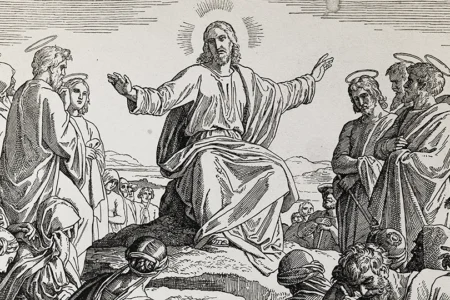


Jesus Christ is all anyone needs! Yes ! We are now complete in Christ is all in all! Sufficient!
Thank God for the revelation in his Word. The Word instructs us what is needed in our lives. Faith is created by reading the Word. May the revelation of the Lord Jesus Christ enrich us to the fullest measure in Jesus name. Amen. There will be no excuses.