The Hanukkah Backstory
Following the fall of Israel’s kingdom, three Gentile empires ruled the Jewish people before the reign of Antiochus Epiphanes, the villain of Hanukkah.
Although Hanukkah is considered a minor feast on the Jewish calendar, it is not minor in Jewish history. To understand the holiday’s meaning, it is important to understand the geopolitical circumstances that led to the festival of Hanukkah. After the Jewish people lost their autonomy, they were ruled by three Gentile empires before they ended up under the authority of the evil Antiochus Epiphanes.
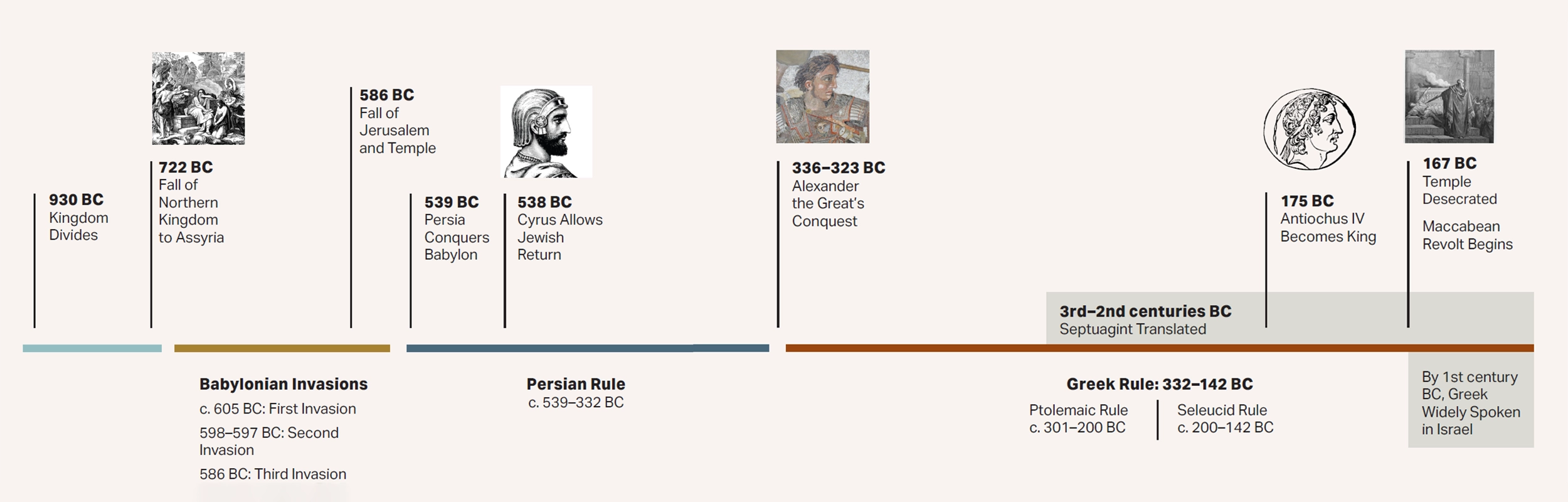
Upon King Solomon’s death, his son Rehoboam became ruler over all Israel. Rehoboam refused to improve conditions in the nation, causing revolt and division among the 12 tribes. The 10 northern tribes split from the Davidic kingdom in 930 BC and became known as the northern kingdom, or Israel. The remaining tribes of Judah and Benjamin became known as the southern kingdom, or Judah.
In 722 BC, Assyria destroyed the northern kingdom (2 Ki. 17). Prophets warned Judah to repent of its sins or God would judge the southern kingdom as He had the northern.
Babylonian Rule
However, Judah failed to heed God’s warning. Its disobedience to Him and the Mosaic Covenant resulted in its invasion by Babylon. The first invasion took place during the reign of Jehoiakim, around 605 BC (Dan. 1:1). A second invasion came in late 598 or early 597 BC, resulting in the deportation to Babylon of King Jehoiachin and many Judeans.
A third Babylonian invasion came in 586 BC. This one resulted in the destruction of Solomon’s Temple and the city of Jerusalem. A massive number of Judeans who survived were exiled to Babylon until their prophesied deliverance would come 70 years later (Jer. 25:1–11). Since the Babylonians already had vanquished the Assyrian empire, all the Jewish people in the world now fell under Babylonian rule.
Persian Rule
In 539 BC, Cyrus, king of Persia, defeated the Babylonians. Now the Jewish people were under his jurisdiction. The following year, Cyrus passed a decree allowing them to return home and rebuild both Jerusalem and the Jewish Temple.
This remarkable event highlights the sovereignty of God, who had announced this geopolitical change in the Gentile world through the prophet Isaiah 150 years earlier, declaring it would result in the Jews’ deliverance from Babylonian captivity. Isaiah specifically named Cyrus as the deliverer a century and a half before Cyrus was born (Isa. 44:28), affirming God’s declaration, “For I am God, and there is no other; I am God, and there is none like Me, declaring the end from the beginning, and from ancient times things that are not yet done” (46:9–10).
Cyrus’s edict to free the Jews also underscores the truth of Proverbs 21:1: “The king’s heart is in the hand of the Lord, like the rivers of water; He turns it wherever He wishes.” The historical fulfillment of the Cyrus prophecy appears in 2 Chronicles 36:22–23 and Ezra 1:1–11. Israel remained under Persian control from about 539 to 332 BC.
Grecian Rule
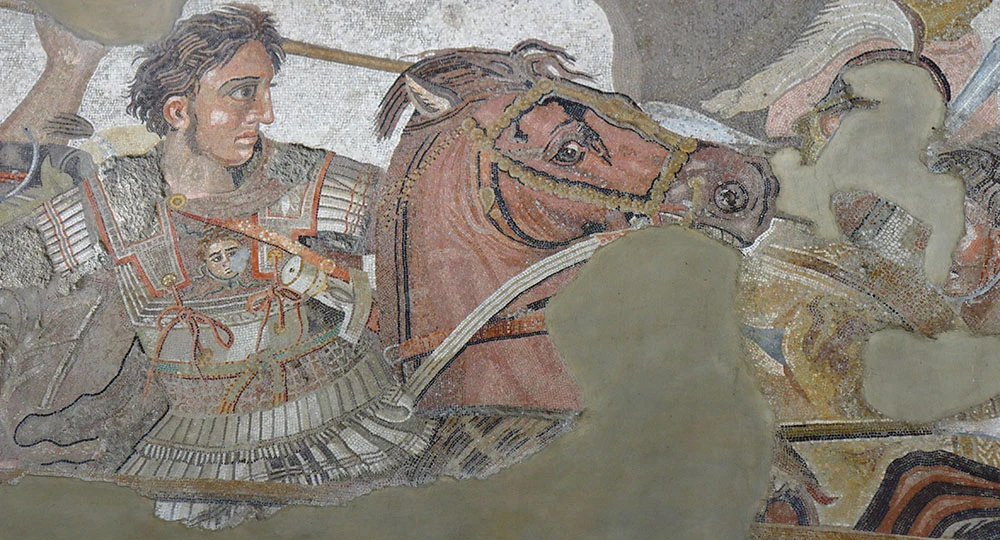
After the Persians came the Greeks. Alexander III (356–323 BC) was the son of King Philip II of Macedonia, Greece. Alexander was schooled by Aristotle in philosophy, medicine, and science. Upon the murder of his father, he was crowned king of Macedonia, later becoming known as Alexander the Great.
Daniel and Zechariah both prophesied about Greece and Alexander’s empire but did not mention him by name. In Daniel 8, a ram and goat represent the Medo-Persian empire and Greece, respectively. The goat moves at such great speed “across the surface of the whole earth” that his feet don’t even touch the ground (v. 5). The large horn between his eyes represents Alexander the Great. The goat destroys the once-mighty ram (v. 7).
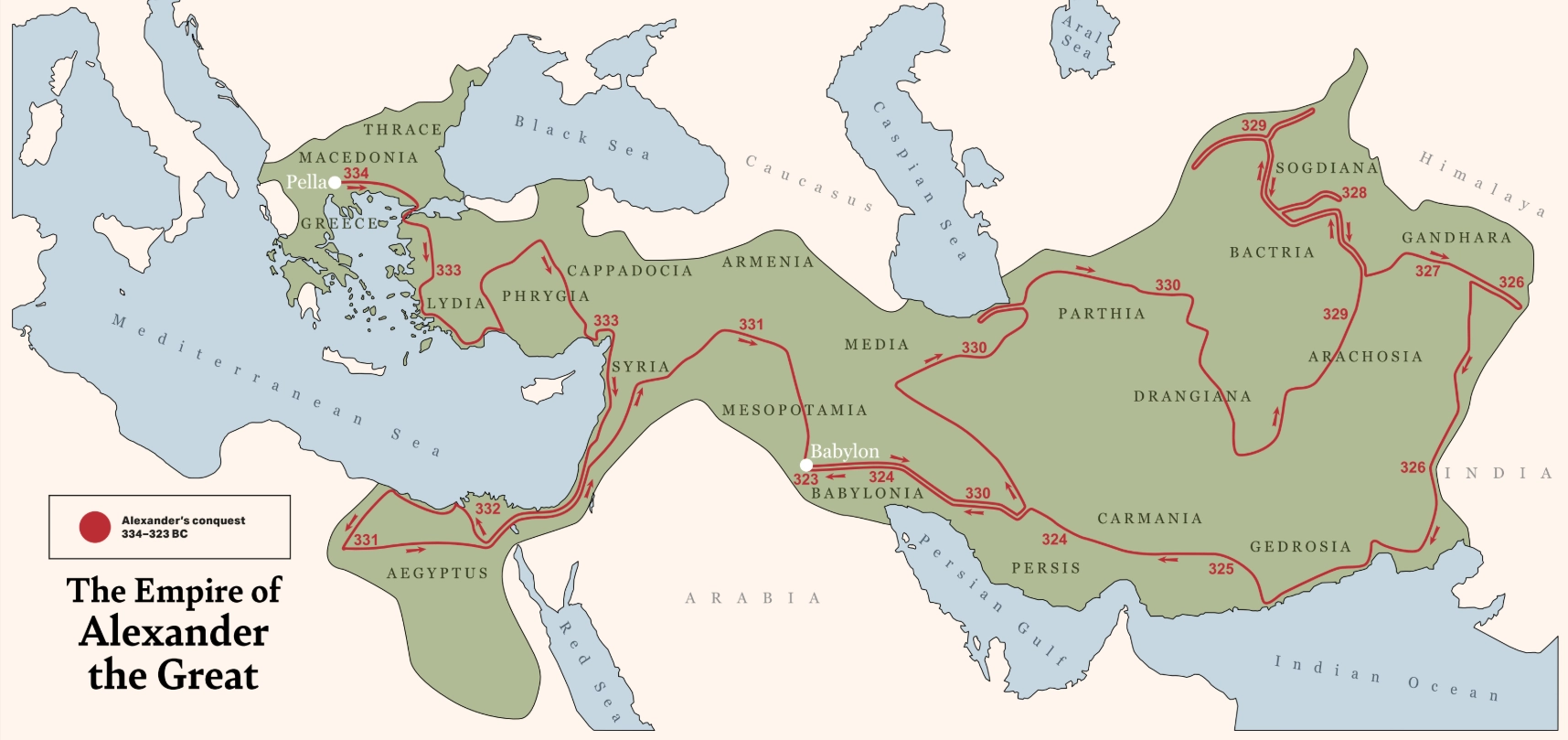
Alexander began his rapid world conquest in 336 BC. During his brief life of only 32 years and reign of 13 years, he conquered and ruled over one of the largest empires in ancient history. It included the Medo-Persian empire, all of Asia Minor, Egypt, Israel, and Syria; and it extended as far east as India, whereupon his army refused to go farther.
Alexander left a huge legacy, conquering most of the known world of his day. He died in Babylon, where he lived at the time. Many have speculated on the cause of his death, but it is still unknown.
None of Alexander’s empire went to his posterity. His two sons were murdered, one before Alexander’s death and the other afterward, leaving no heir to rule over his massive realm. So, the territory was divided among his four generals:
• Cassander ruled Macedonia.
• Lysimachus ruled Thrace and Asia Minor.
• Ptolemy I Soter established the Ptolemaic kingdom in Egypt. Its capital, Alexandria, became a major center of Hellenistic power and culture.
• Seleucus I Nicator established the Seleucid empire, a vast area headquartered in Syria (cf. Dan. 11:4–20). This empire played a major role in Hanukkah and the history of Israel and the Jewish people.
Though they ruled the known world, these generals never possessed Alexander’s power or ability to lead. Great tension existed between the Ptolemaic empire that ruled Egypt (south of Judea) and the Seleucid empire that ruled Syria (north of Judea).
Vying for supremacy, the Ptolemies and Seleucids fought continually over control of trade routes, territories, and alliances. The Ptolemies ruled Judea from around 301 to 200 BC, after which the Seleucids ruled from around 200 to 142 BC. Israel suffered greatly during this time, caught in the middle of the conflict. However, no one would persecute Israel worse than the infamous Seleucid ruler Antiochus Epiphanes (vv. 21–35).
Hellenistic Proliferation
The word Hellenism describes the influence Greek culture, language, philosophy, scientific advancements, government, and architecture had in the lands Alexander the Great conquered. For example, Alexandria, Egypt, became a major center of learning, blending everything Greek with the local culture of the day.
Hellenism greatly changed certain aspects of Judaism, though clashing with Jewish beliefs and traditions. Greek became the universal language, often supplanting the Jewish people’s native Hebrew and Aramaic.
During their captivity in Babylon, many Jews lost the ability to speak and read Hebrew and could not understand the Hebrew Scriptures. So, Jewish scholars translated them into Koine Greek. The translation was called the Septuagint. It was basically created for Greek-speaking Jews in Alexandria in the 3rd and 2nd centuries BC. By the 1st century BC, most Jewish people in Israel spoke Greek. Thus, they used the Septuagint in everyday life.
When it came to religious identification, Hellenism influenced the Jewish people in different ways. During the Greek occupation, two important political and religious groups emerged in Israel: the Sadducees and Pharisees.
The Sadducees aligned themselves with the ruling powers of Greece. They denied the resurrection of the dead, the existence of angels, and any obligation to the Oral Law in Judaism. They managed the Temple finances and wielded political power. They kept only the written Law in the Mosaic books of the Old Testament. They were the priestly class aristocrats and wealthy Jews and held powerful positions within the Sanhedrin (Jewish court).
The Pharisees, on the other hand, adhered strictly to both the Mosaic and Oral Laws. They strongly opposed Hellenistic culture and its political rule in Israel. Jesus strongly rejected the Pharisees’ practices and lifestyle (Mt. 23:1–39; Mk. 7:1–23).
During this time, a third group also emerged called the Essenes. They established a community at Qumran and opposed Hellenistic culture in Israel.
The Hellenistic period was not good for Israel. It was secular and filled with ungodly humanism that drove the Jewish people away from God.
Photos: Adobe Stock and Wikimedia Commons