Burying the Idea of a Palestinian State
The Israeli government recently announced plans to implement a long-delayed building project that would split the West Bank into north and south and “bury the idea of a Palestinian state.” Israeli Finance Minister Bezalel Smotrich said the move constitutes a response to the growing number of Western countries declaring that they intend to recognize a Palestinian state.
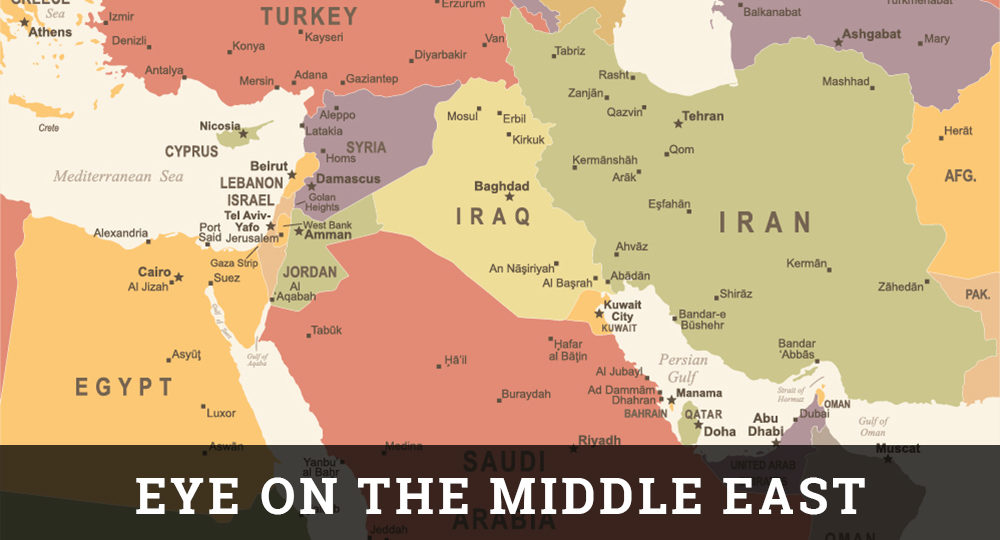
The so-called E1 project between Jerusalem and Ma’ale Adumim, a Jewish suburb located seven kilometers (four miles) east of Israel’s capital, envisions the construction of more than 3,000 housing units that will connect the two municipalities from east to west. The project has been frozen for decades due to opposition from Western leaders who fear the new neighborhood would horizontally bisect the West Bank and preclude the establishment of a territorially contiguous Palestinian state.
Established in 1975, Ma’ale Adumim currently has a population of around 40,000 inhabitants and is the largest Jewish city in the West Bank, known in the Bible as Judea and Samaria. If completed, the E1 project would end the Palestinians’ aspirations to develop a metropolitan area connecting East Jerusalem with Ramallah and Bethlehem that would serve as the cornerstone of their future state.
In March, the Israeli cabinet approved the construction of a north-to-south underground tunnel between Jerusalem and Ma’ale Adumim that eventually will be the primary road connection for Palestinians seeking to travel between the northern and southern parts of the West Bank. The $100 million transportation corridor, dubbed the “Fabric of Life” bypass road, would divert Arab traffic away from Jewish areas to bolster Israeli security following a string of terrorist attacks.
According to the Jerusalem Center for Security and Foreign Affairs, every Israeli government since the 1990s has supported the E1 project, “appreciating the need to create an Israeli urban continuity from Jerusalem to Ma’ale Adumim, leading out to the Dead Sea and the Jordanian border.”
Smotrich said approval of the construction plans for E1 thwarts the notion of a Palestinian state and “continues the many steps we are taking on the ground as part of the de facto sovereignty plan.” He added: “This is Zionism at its best—building, settling, and strengthening our sovereignty in the land of Israel.”
The Israeli plan has infuriated European proponents of the so-called two-state solution, which envisions a Palestinian state alongside Israel. British Foreign Minister David Lammy said the E1 project would “divide a future Palestinian state in two.” Spanish Foreign Minister José Manuel Albares decried that the plan “undermines the viability of the two-state solution, the only path to peace.” France’s Foreign Ministry condemned the project with “the utmost firmness” because it would “cut the West Bank in two and seriously undermine the two-state solution.” The European Union’s chief diplomat, Kaja Kallas, said the plan “further undermines the two-state solution” and called on Israel “to desist.”
Despite international support, the creation of a Palestinian state is unlikely to happen anytime soon. In Israel, public support for a two-state solution has reached a new low since the Hamas terrorist attacks in October 2023. Only 16% of Jewish Israelis currently believe that peaceful coexistence between Israel and a future Palestinian state is possible, according to a recent poll by the Pew Research Center. Israeli Prime Minister Benjamin Netanyahu said he is opposed to recognizing Palestinian statehood because it would reward “Hamas’s monstrous terrorism.”