Israel and Lebanon Begin Direct Negotiations
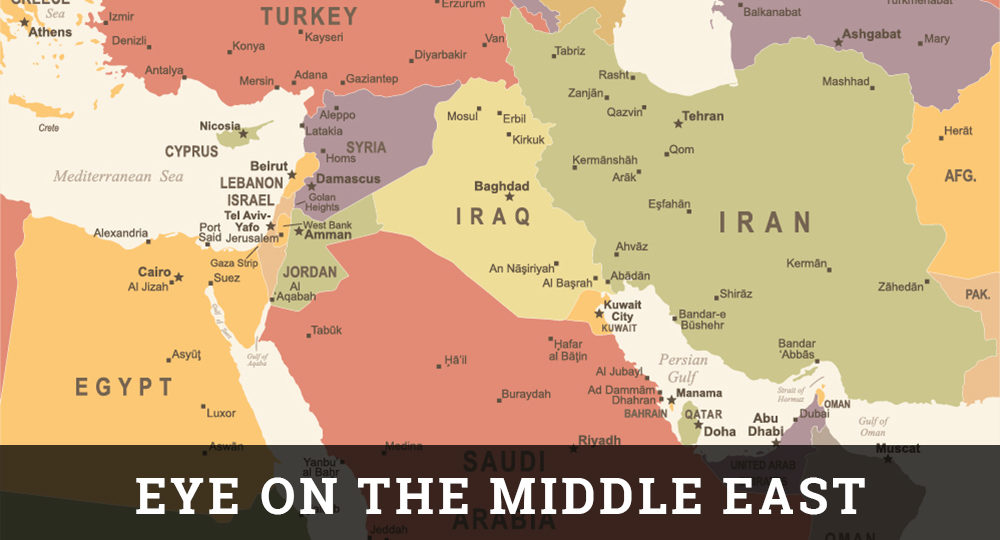
Israel and Lebanon recently held their first direct diplomatic talks in more than three decades. The two countries—which have no formal diplomatic relations and technically have remained in a state of war since 1948—discussed confidence-building measures aimed at de-escalating tensions in southern Lebanon near their shared border.
The historic talks were brokered by the Trump administration, which is trying to foster dialogue between Israel and Lebanon. The long-term objective is normalizing diplomatic and economic ties between the two countries. In the near term, however, the White House hopes the bilateral meeting will help avoid a resumption of war in Lebanon.
The war began in October 2023 when the Iran-backed terrorist group Hezbollah fired hundreds of rockets and missiles into northern Israel. A year of cross-border fighting ensued, resulting in Israeli airstrikes and a ground invasion of southern Lebanon in October 2024. After Israel assassinated Hezbollah Secretary-General Hassan Nasrallah and much of the group’s senior leadership, the United States brokered a ceasefire, which went into effect in November 2024.
The ceasefire agreement required Hezbollah to remove its fighters and weapons from south of Lebanon’s Litani River, about 30 kilometers (18 miles) north of the border with Israel. The terms of the ceasefire also obligated the Lebanese government to disarm Hezbollah and to ensure that the Lebanese Armed Forces, the country’s official military, is the only group bearing weapons. In exchange, Israeli troops were to withdraw from southern Lebanon.
The ceasefire deal is in danger of collapsing because the Lebanese government refuses to disarm Hezbollah due to fears of provoking sectarian conflict. Although Israel has severely weakened Hezbollah, the group retains substantial support among Lebanon’s Shia Muslim population, which comprises around 30% of the total population, roughly equal to the number of Sunni Muslims in the country. The Lebanese government worries that if it takes meaningful action against Hezbollah, the country could again descend into civil war. At least 150,000 people died during the 1975–1990 Lebanese Civil War.
Hezbollah has been taking advantage of the Lebanese government’s inaction by rebuilding its missile and rocket launch sites and repairing its military infrastructure in southern Lebanon. Israel says Hezbollah also has resumed smuggling weapons from Iran via Syria.
As a result, Israel has stepped up its airstrikes in Lebanon to prevent Hezbollah from rebuilding its military capability. The Jewish state has warned the White House that if Hezbollah continues to rearm at the current rate, it will be forced to resume the war to degrade the terrorist group.
Amid the rising tensions, the Trump administration pressed both sides to negotiate face to face. Israeli Prime Minister Benjamin Netanyahu said the meeting took place “in a good atmosphere” and that it “was agreed that ideas would be formulated to advance possible economic cooperation between Israel and Lebanon.” He added that “the disarmament of Hezbollah is obligatory, regardless of the advancement of economic cooperation.”
During his address to the United Nations General Assembly in September 2025, Netanyahu extended an olive branch to Lebanon, saying that peace between the two nations “is possible.” Lebanese President Joseph Aoun and Prime Minister Nawaf Salam have both publicly talked about the need for peace with Israel. According to Aoun, Lebanon has “no choice” but to negotiate with Israel. “The language of negotiation is more important than the language of war,” he said.