Fry It Up in Oil!
Each Jewish holiday comes with its own foods and traditions that make the celebration special, and Hanukkah is no exception.
When I was young, I always laughed when my parents and their friends discussed what they would eat for dinner while they were still eating lunch.
Now I catch myself doing the same thing. Food enhances the joy, togetherness, and sometimes the sadness that affect our lives. The appearance, aromas, and textures of what we eat have the surprising power to stir our emotions and transport us back in time. Perhaps that’s why each Jewish holiday comes with its own delicacies.
Jewish traditions incorporate specific foods on specific holidays; and because Jewish life has always hung by a thread, the famous 20th-century Jewish comedian Alan King summed up Jewish holidays by joking, “They tried to kill us. We survived. Let’s eat!”
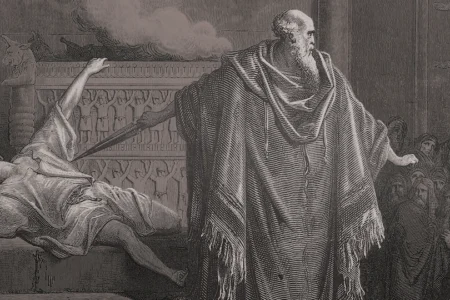
That’s the gist of Hanukkah! This year, the holiday begins at sundown on December 4. But the story of Hanukkah began 2,200 years ago, when Antiochus IV (Epiphanes), a brutal Seleucid tyrant, resolved to either assimilate or assassinate every Jewish person in his kingdom. He outlawed Jewish worship and forbade circumcision, Torah reading, and Sabbath observance. Worse, he desecrated the Temple by sacrificing a pig there and pouring its blood on the altar. He even removed all Jewish presence around Jerusalem and ordered his troops to kill anyone caught practicing Judaism.
However, about 15 miles from Jerusalem in the town of Modi’in, a priestly family headed by a man named Mattathias decided to fight back. Preferring death to capitulation, he and his five sons used guerrilla-war tactics to battle the Seleucids. Soon they became known as Maccabees (hammers) because of their hammer-like blows. To be a Maccabee today means to embody courage, resilience, and unwavering faith in the face of overwhelming opposition.
In 164 BC, three years after Antiochus desecrated the Temple, the Maccabees liberated Jerusalem and entered the Lord’s house, which by then was in ruins. Immediately, they began to cleanse and restore it.
As the story goes, they found only enough pure, consecrated oil to keep the Temple menorah (lampstand) burning for a single day. But instead of burning for only one day, it burned eight days, providing enough time for new oil to be pressed and consecrated. It is the Maccabees’ victory and the miracle of the oil that we remember on Hanukkah.
Latkes, Doughnuts, and Gelt
So, what foods help us remember the miracle of the oil? Greasy ones! Forget the cholesterol. According to the rabbis, fry it up in oil!
Along with millions of other Jewish mothers, my mother purchased pounds and pounds of potatoes before the start of the holiday. Why potatoes? Because potato latkes (pancakes) are a time-honored staple at the Hanukkah table.
She spent hours peeling and grating them (no food processors back then), then mixed them with eggs and onions and fried them in oil, turning out the best latkes ever. We ate them with sour cream and/or applesauce. Although it was no treat for me, my mother served another dish made with oil: fish sticks.
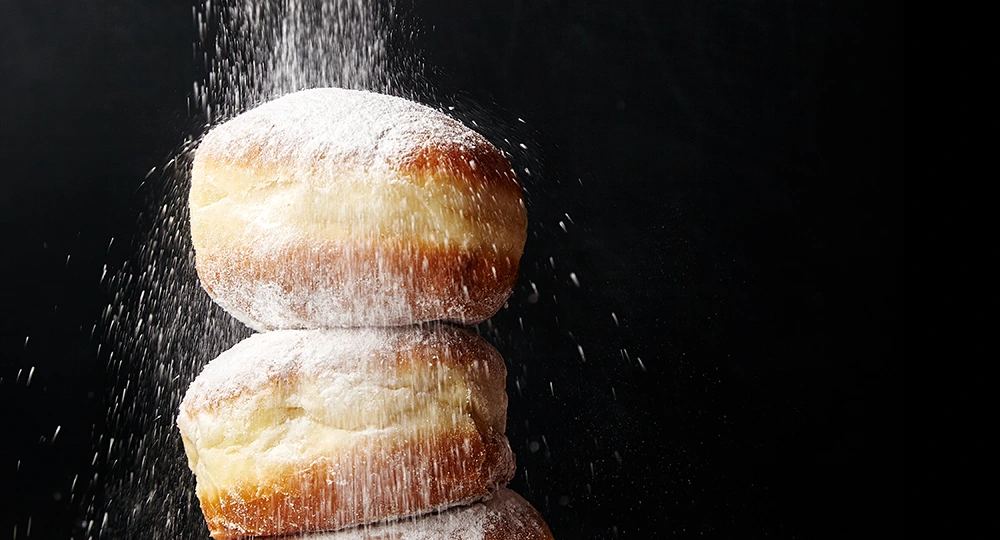
A popular Hanukkah food, particularly in Israel, is the sufganiyah, the jelly doughnut. Sufganiyot (plural) provide a nice sugar rush too. Whether latkes, doughnuts, or fish sticks, it’s all about the oil.
Hanukkah gelt (money) also plays an important role in the eight-day celebration. Usually this gelt consists of gold-foiled chocolate coins that children use to play a game called sevivon, or dreidel. A dreidel is a four-sided spinning top with one Hebrew letter on each side: nun, gimel, hey, and shin. Each letter stands for a Hebrew word. The words stand for “A great miracle happened there.” Israeli dreidels substitute the letter pe for shin to read, “A great miracle happened here.”
The children spin the top; and, depending on which letter shows on top when the dreidel stops, they either do nothing, place one chocolate coin into the pot, take the pot, or take half the pot. The game originated during the days of Antiochus IV to hide the fact that children were studying Torah. To avoid detection, they played dreidel when the authorities came around.
As with all games, people can get pretty worked up about winning. In my home, everyone was a winner because my sisters and I would eat most of the gelt before we even played the game.
Blessed Art Thou, O Lord Our God
But Hanukkah is not about food. The food is about Hanukkah.
After eating and enjoying time together as a family, we would gather around the hanukkiah, a nine-branched menorah designed especially for Hanukkah. Eight of the candleholders usually line up evenly. A ninth is set either higher or to the side. That candle is called the shamash (servant) because it is used to light the others. All Jewish holidays begin at sundown. So, on December 4, Jewish people around the world will light the shamash and one candle. Each evening, they will add another candle until all eight plus the shamash are lit. My sisters and I always fought over who got to light the hanukkiah, particularly on the eighth day.
Then we recited the blessing. On the first night, we recited a special blessing: “Blessed art thou, O Lord our God, Ruler of the universe, who has granted us life, sustained us, and enabled us to reach this season.” Each successive day we would pray,
Blessed art Thou, O Lord our God, Ruler of the universe, who has sanctified us with Your commandments and commanded us to light the Hanukkah candles. Blessed art Thou, O Lord our God, Ruler of the universe, who has performed miracles for our ancestors in those days, in this season.
We also sang songs and exchanged presents, emphasizing the happy times brought about by our preservation as a people.
No Hanukkah, No Jesus
If you’re a Christian, you may be thinking, Thanks for the history and culinary information, but how does any of it relate to me?
First, the Lord Jesus was Jewish. Jewish culture and customs played a part in His life. John 10:22–23 tells us, “Now it was the Feast of Dedication [Hanukkah] in Jerusalem, and it was winter. And Jesus walked in the temple, in Solomon’s porch.” Hanukkah is about how God preserved the Jewish people; and Jesus used that time to emphasize preservation, teaching that those who embrace Him are preserved and secure: “My Father, who has given them [believers] to Me, is greater than all; and no one is able to snatch them out of My Father’s hand” (v. 29). Just as He will keep His promise to those who put their trust in Him, He will keep His promises to Israel.
Second, had Antiochus won and annihilated the Jews, not only would there be no Hanukkah, but there would be no Christianity because there would be no Jesus. God created the Jewish people and foreordained that Jesus should be born through them. Hanukkah celebrates the sovereignty of a God who will never renege on a promise and who will never be defeated:
Remember the former things of old, for I am God, and there is no other; I am God, and there is none like Me, declaring the end from the beginning, and from ancient times the things that are not yet done. . . . I bring My righteousness near, it shall not be far off. . . . And I will place salvation in Zion, for Israel My glory (Isa. 46:9–10, 13).